
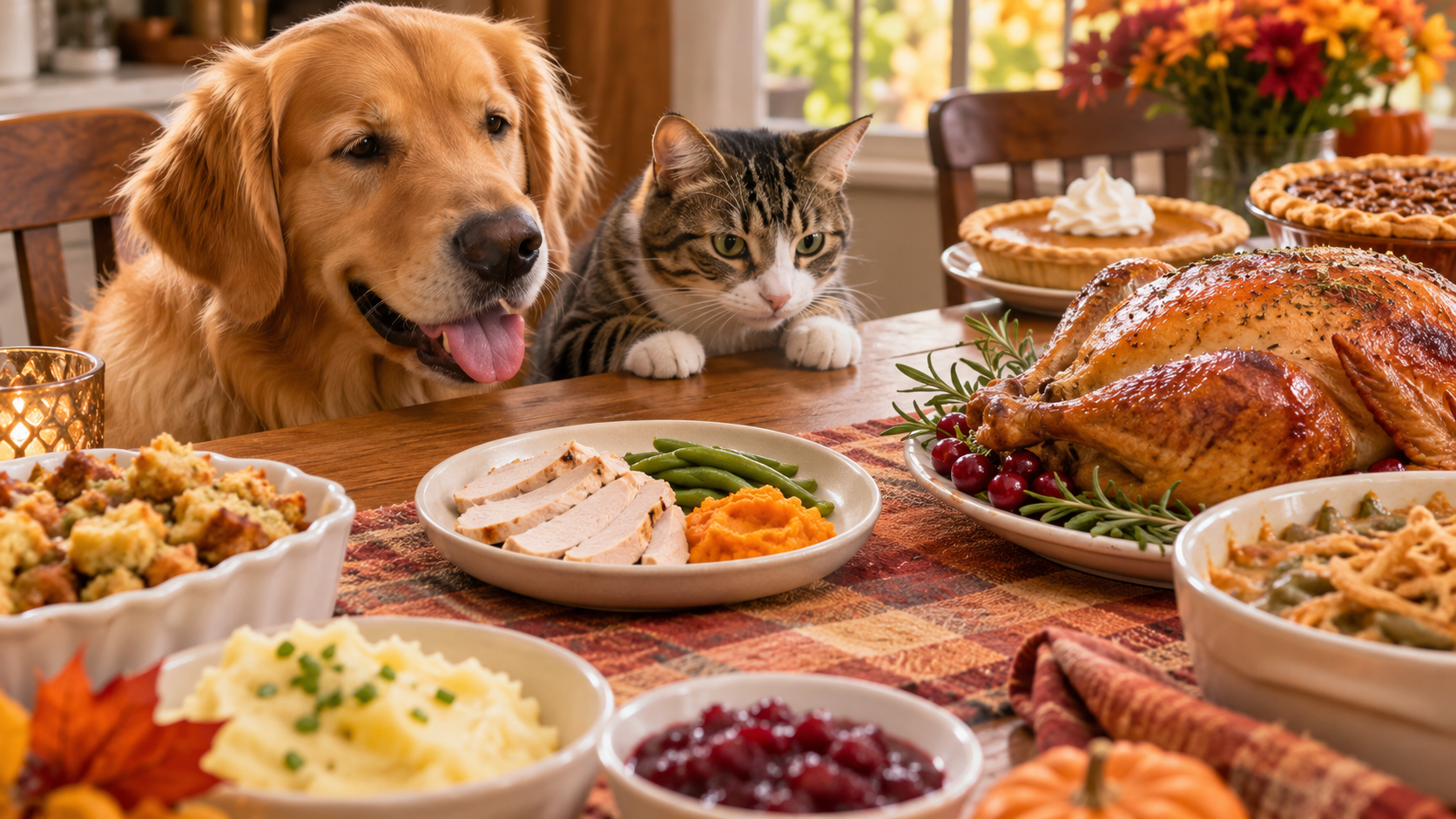
Thanksgiving has a way of turning even the most ordinary kitchen into a busy gathering place. Between preparing the turkey, setting out appetizers, and making sure everyone has a seat, it’s easy to overlook what your pets are doing.
And if your dog has been watching the oven all morning, they’re probably hoping you’ll overlook a few things.
While sharing food might seem like a sweet way to include your pet in the celebration, some Thanksgiving favorites contain ingredients that can make dogs and cats seriously ill.
At Canyon View Cares Veterinary Hospital in Layton, UT, we want local pet owners to enjoy the holiday knowing their furry family members are safe. Before you start cooking, serving, and packing up leftovers, here’s a Thanksgiving pet safety checklist worth keeping handy.
Before Cooking: Check Your Ingredients
Many holiday food hazards begin long before dinner reaches the table.
Common ingredients such as onions, garlic, raisins, chocolate, and sugar substitutes may be sitting on the counter while you’re preparing your meal.
These ingredients aren’t just unhealthy treats. Some can cause serious poisoning.
Onions and garlic contain compounds that can damage red blood cells in dogs and cats. This may lead to anemia, which can cause weakness, pale gums, and difficulty breathing. Symptoms may not appear until several days after ingestion.
Grapes and raisins can cause acute kidney injury in dogs. Because the toxic amount is unpredictable, any known ingestion requires immediate veterinary guidance.
Chocolate contains theobromine and caffeine, which can affect a pet’s heart and nervous system. Dark chocolate and baking chocolate are particularly dangerous.
Xylitol, sometimes labeled birch sugar, can cause dangerously low blood sugar and liver injury in dogs. It may appear in certain sugar-free desserts, candies, and packaged products.
Unbaked yeast dough can expand in the stomach and produce alcohol during fermentation.
Keep these ingredients secured while cooking, especially if your dog likes to investigate countertops.
While Preparing the Turkey: Set Aside a Safe Portion
Turkey is one Thanksgiving food that pets may be able to enjoy, provided it’s prepared appropriately.
Plain, fully cooked turkey meat without bones, skin, or seasoning can be a suitable occasional treat for many healthy dogs and cats.
If you’d like to share some with your pet, set aside a small portion before adding butter, garlic, onions, or other seasonings.
Avoid offering turkey skin because its high fat content can contribute to digestive upset and pancreatitis.
Cooked turkey bones are another serious concern.
Bones can splinter into sharp pieces, creating choking hazards or potentially injuring the digestive tract. Some swallowed bones can also cause intestinal blockages.
If your pet swallows a cooked bone, contact a veterinarian for guidance rather than attempting to make them vomit.
Before Serving: Know Which Side Dishes to Skip
Some of the most tempting Thanksgiving dishes are also the least appropriate for pets.
Stuffing often contains onions, garlic, butter, and seasonings. Even a small serving may contain ingredients that are harmful to dogs and cats.
Mashed potatoes frequently include butter, cream, garlic, and salt. Plain cooked potatoes aren’t inherently toxic to dogs, but heavily seasoned holiday versions can cause digestive problems.
Green bean casserole may contain fried onions, creamy soup, and other rich ingredients.
Sweet potato casserole often includes butter, sugar, and marshmallows.
Gravy is another food best kept away from pets because it may contain significant amounts of fat, sodium, onions, or garlic.
The simplest rule is to avoid sharing prepared side dishes unless you’re certain every ingredient is safe.
During Dinner: Watch for Well-Meaning Guests
Most pet owners know their dog’s begging routine. Holiday visitors might not.
A relative may offer your dog a piece of stuffing without realizing it contains onions. Someone else might give your cat a bite of seasoned turkey.
Before dinner, politely remind guests not to feed your pets without asking.
If you have young children visiting, explain that animals need their own food and treats.
For particularly food-motivated dogs, consider having them relax in another room with an enrichment toy while everyone eats.
Cats may appreciate a quiet space away from the excitement.
After Dinner: Don’t Forget the Garbage
Thanksgiving cleanup deserves just as much attention as meal preparation.
A turkey carcass left on the counter or an open trash bag filled with scraps can be irresistible to pets.
Dogs may swallow bones, corn cobs, food wrappers, or other objects that can become lodged in their digestive tract.
Cats may investigate greasy pans, discarded meat, or leftover sauces.
Secure garbage containers, refrigerate leftovers promptly, and keep dirty dishes out of reach.
If your pet swallows a foreign object, contact a veterinarian even if they initially appear comfortable.
Know the Signs of Pancreatitis
One of the less obvious Thanksgiving dangers is pancreatitis, inflammation of the pancreas.
This condition can occur in susceptible pets after eating rich, fatty foods such as turkey skin, gravy, or buttery casseroles.
Symptoms may include vomiting, diarrhea, abdominal pain, reduced appetite, and unusual tiredness.
Some dogs appear hunched or reluctant to move because their abdomen hurts.
Pancreatitis can range from mild to severe, and some cases require hospitalization.
If your pet develops repeated vomiting or significant discomfort after eating fatty foods, seek veterinary attention promptly.
What to Do If Your Pet Eats Something Dangerous
If your pet gets into Thanksgiving food, start by identifying what they consumed.
Check the ingredients, estimate the amount eaten, and note approximately when it happened.
Contact your veterinarian or an emergency veterinary hospital for advice.
You can also contact ASPCA Animal Poison Control at (888) 426-4435 or Pet Poison Helpline at (855) 764-7661. Consultation fees may apply.
Do not give hydrogen peroxide, medications, or home remedies unless specifically directed by a veterinary professional.
If your pet eats grapes, raisins, xylitol, or another potentially toxic ingredient, don’t wait for symptoms before seeking guidance.
When Is It a Veterinary Emergency?
Some symptoms require immediate attention.
Difficulty breathing, seizures, collapse, repeated vomiting, severe abdominal pain, or a swollen abdomen can indicate a serious problem.
Tremors, unusual weakness, pale gums, or significant changes in behavior also warrant veterinary evaluation.
Remember that some toxicities cause delayed symptoms. A pet appearing normal immediately after eating something harmful isn’t necessarily safe.
A Safer Thanksgiving for Layton Pets
Thanksgiving should be about enjoying time with family, including the four-legged members.
Small portions of plain turkey, cooked green beans, or unseasoned sweet potato may be appropriate for many healthy pets.
However, animals with food allergies, sensitive stomachs, or prescription diets should stick with veterinarian-approved treats.
At Canyon View Cares Veterinary Hospital in Layton, UT, we’re here to help families make informed decisions about their pets’ nutrition, wellness, and safety.
If your pet eats something concerning or develops unusual symptoms, contact our veterinary team. For suspected poisoning or severe symptoms, seek emergency veterinary care immediately.
With a little preparation, you can keep the holiday focused on good food, great company, and healthy pets.