
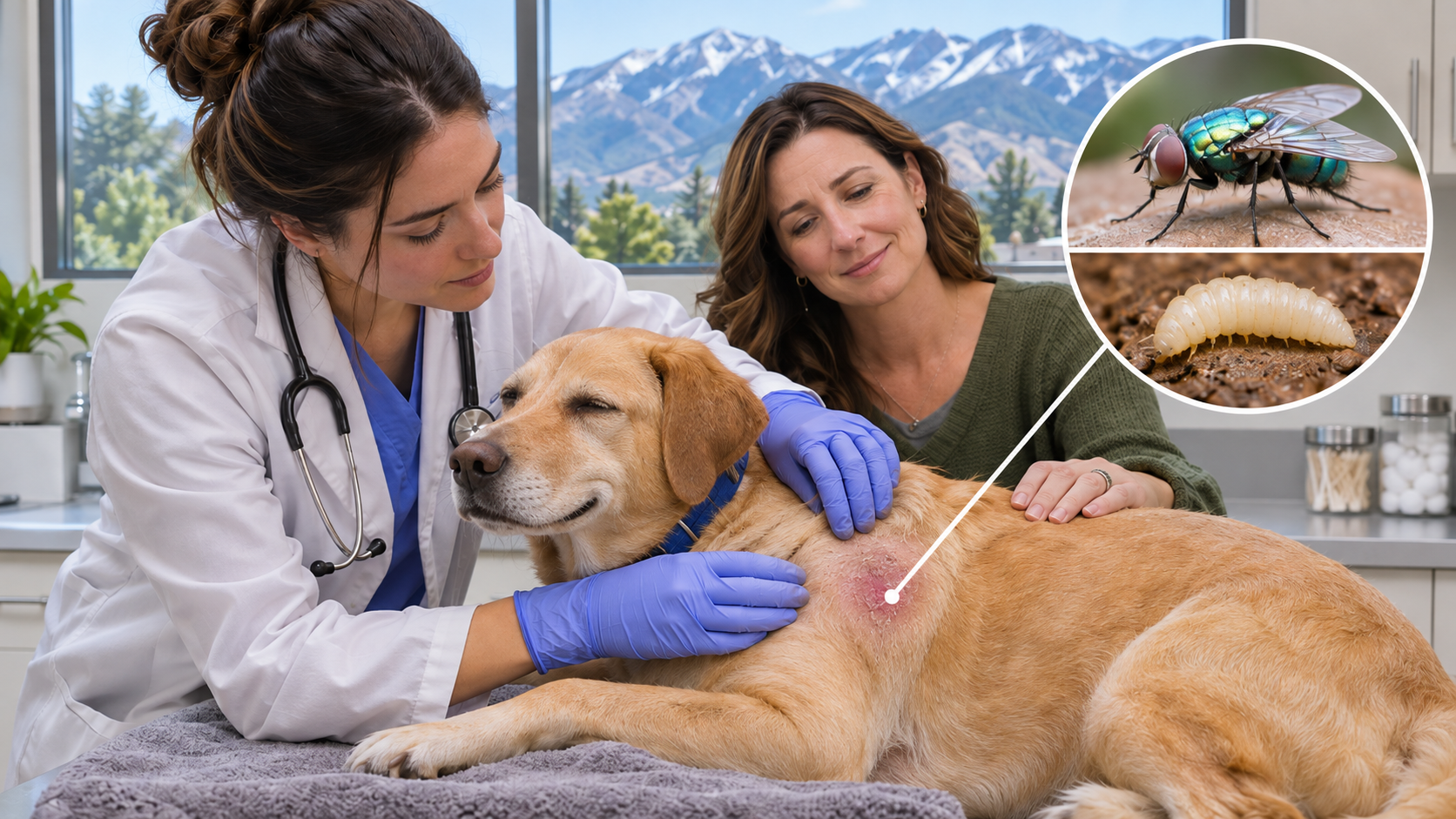
Most minor scratches improve with time, but a wound that suddenly gets worse deserves attention.
One possible cause of severe wound damage is New World screwworm, a parasitic fly whose larvae feed on living tissue. Dogs, cats, livestock, and other warm-blooded animals can be affected.
Signs That Something Isn’t Right
Contact a veterinarian if you notice a wound that becomes deeper or larger, visible maggots, swelling, bloody discharge, or a strong unpleasant odor.>/p>
Behavior changes matter, too. Persistent licking, head shaking, pain, irritability, lethargy, or decreased appetite may indicate an underlying problem.
Suspected screwworm infestations should never be treated at home. Veterinary care is necessary, and suspected cases require appropriate disease reporting.>/p>
Don’t Forget Routine Protection
Year-round flea and tick prevention remains an important part of pet wellness. The FDA has authorized certain parasite medications for treating screwworm infestations, so ask your veterinarian about suitable options.
Traveling Beyond Layton?
Depending on your destination and the areas affected by screwworm, your pet may need a health certificate, recent veterinary examination, specific documentation, or an entry permit.
California has established additional rules for pets entering from designated affected areas. Visit the CDFA website for current details.
Canyon View Cares Layton encourages pet owners to stay alert to unusual wounds and plan ahead for interstate travel.
Important Animal Health Resources
Early awareness and reliable information are essential when dealing with emerging parasites. Check the USDA for current screwworm activity, consult the FDA for authorized treatment information, and visit California’s official screwworm resource for travel-related regulations.