
Diagnostics and Imaging in Layton, UT
At Canyon View Cares Layton, we know how worrying it can be when your pet is not acting like themselves, and there is no obvious explanation. Our pet diagnostics in Layton, UT, help us look beyond the symptoms we can see and gather more information about what may be happening inside your dog or cat. From physical examinations and laboratory testing to X-rays, ultrasound, eye testing, and other different types of pet imaging, we use diagnostic tools to narrow down possible causes and guide treatment. Our goal is to replace uncertainty with clearer answers and a care plan built around your individual pet.
Why Veterinary Diagnostics Matter
Dogs and cats cannot tell us exactly where they hurt, how long something has bothered them, or whether a symptom feels better or worse from one day to the next. That means veterinary diagnosis often requires combining what you notice at home with our physical examination and carefully selected tests.
Diagnostic testing can help us investigate symptoms such as reduced appetite, vomiting, diarrhea, coughing, limping, unusual fatigue, skin irritation, weight changes, or changes in behavior. Some conditions can be identified during the initial examination, while others require bloodwork, imaging, skin testing, or additional evaluation to understand what is happening.
We do not believe in testing simply for the sake of testing. We recommend diagnostics when the information can help us answer a specific question about your pet’s health and determine a more appropriate next step.
Pet Imaging Gives Us a View Beneath the Surface
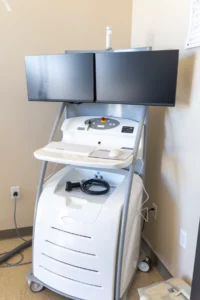
Diagnostic imaging allows us to evaluate parts of the body that cannot be fully assessed during a physical examination. X-rays and ultrasound are commonly used to investigate injuries, internal disease, changes in organs, and other conditions in dogs and cats.
Depending on what your pet is experiencing, imaging may help us evaluate:
- Bones and joints
- The chest and lungs
- The abdomen
- Internal organs
- Suspected injuries
- Possible foreign objects
- Changes associated with illness
- Ongoing conditions that require monitoring
Different imaging methods provide different types of information, which is why the right test depends on the concern being investigated. In many cases, X-rays or ultrasound provide the information needed to move forward, while more advanced imaging may be considered when a condition requires further evaluation.
X-Rays for Injuries and Internal Concerns
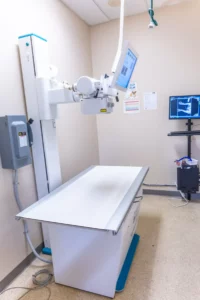
X-rays are particularly useful for looking at bones, joints, the chest, and certain abdominal structures. We may recommend them when a pet is limping, has experienced trauma, is coughing, has difficulty breathing, or shows signs that suggest an internal problem.
Because an X-ray captures an image at a specific moment, positioning matters. Our team works carefully to obtain useful images while keeping your pet as comfortable and calm as possible throughout the process.
The images are considered alongside the physical exam and medical history rather than interpreted in isolation. That broader context helps us determine whether the findings explain your pet’s symptoms or whether another diagnostic step may be needed.
Ultrasound Helps Us Evaluate Soft Tissues and Organs
Ultrasound uses sound waves to create images of structures inside the body and can be particularly helpful when we need a closer look at soft tissues and internal organs. It gives us a different kind of information than an X-ray and can be used as part of a broader diagnostic workup.
The most useful imaging method depends on your pet’s symptoms and the part of the body we need to evaluate. We will explain why a particular test is being recommended and how the results may influence treatment.
Eye Problems Deserve Prompt Attention
Eye concerns can change quickly, especially when pain, injury, pressure, or the surface of the eye is involved. If your pet is squinting, rubbing an eye, experiencing redness or discharge, or showing a sudden change in vision, we recommend contacting us rather than waiting to see whether the problem resolves.
Our eye evaluations may involve careful visual examination along with specialized testing when appropriate. Depending on the symptoms, testing can include staining the eye to identify surface injuries, measuring tear production, or using a tonometer to evaluate eye pressure.
Cats can also develop eye conditions that require prompt evaluation, and subtle changes should not be ignored simply because a cat otherwise seems normal. Early examination gives us a better opportunity to identify the cause and protect comfort and vision.
Allergy and Skin Diagnostics for Persistent Itching
Skin problems can make pets uncomfortable even when the rest of their health seems normal. Dogs in particular can experience allergies related to food, fleas, pollen, mold, environmental triggers, and other sources, with symptoms sometimes appearing as itching, chewing, hair loss, recurrent ear problems, or irritated skin.
Diagnosing these problems can involve several steps because allergies are not the only cause of itching. We may first evaluate the skin for parasites, yeast, bacteria, inflammation, or other conditions before deciding whether allergy testing, skin testing, or a food elimination approach may be appropriate.
Our goal is to identify what is driving the symptoms rather than simply masking the itching. Finding the underlying cause allows us to build a treatment plan that makes more sense for the individual pet.
Medication Is Most Useful After the Right Diagnosis
Medication can play an important role in treating infections, pain, inflammation, allergies, chronic disease, and other health problems, but the correct medication depends on an accurate diagnosis. We consider your pet’s condition, age, health history, current medications, and potential side effects before recommending treatment.
It is also important to tell us about supplements, over-the-counter products, and medications your pet is already receiving because drug interactions can affect safety and effectiveness. Pets receiving long-term medications may require periodic examinations or laboratory monitoring so we can make sure treatment remains appropriate.
We encourage owners not to give human or leftover pet medications without veterinary guidance. Even familiar medications can be unsafe when the dose, combination, or underlying condition is not appropriate for the patient.
Frequently Asked Questions
Imaging may be recommended for injuries, limping, coughing, abdominal problems, suspected internal disease, or symptoms that cannot be fully explained during an examination. We choose the imaging method based on what we need to evaluate.
X-rays are especially useful for bones, joints, the chest, and certain internal structures, while ultrasound provides detailed views of many soft tissues and organs. Your veterinarian will recommend the test best suited to the concern.
Sudden squinting, obvious pain, significant redness, trauma, cloudiness, or changes in vision should be evaluated promptly. Eye problems can progress quickly, so early assessment is important.
Yes, diagnosing allergies may involve examination, skin evaluation, ruling out parasites or infection, and additional testing or diet trials when appropriate. Because several conditions can look alike, the diagnostic process is tailored to the symptoms.
Some long-term medications can affect organ function or require dose adjustments over time. Follow-up exams and laboratory testing help us monitor both the condition being treated and how well your pet is tolerating therapy.
Get Clearer Answers About Your Pet’s Health
At Canyon View Cares Layton, we understand that not knowing what is wrong with your pet can be one of the most stressful parts of an illness or injury. That’s why our diagnostic approach combines careful examinations, pet imaging, laboratory testing, eye evaluations, dermatology assessments, and thoughtful medication planning so we can build a clearer picture before deciding what comes next. So if your dog or cat is showing new symptoms, acting differently, or needs further evaluation of an ongoing condition, just contact our team today to schedule an appointment and learn more about pet diagnostics in Layton, UT.